
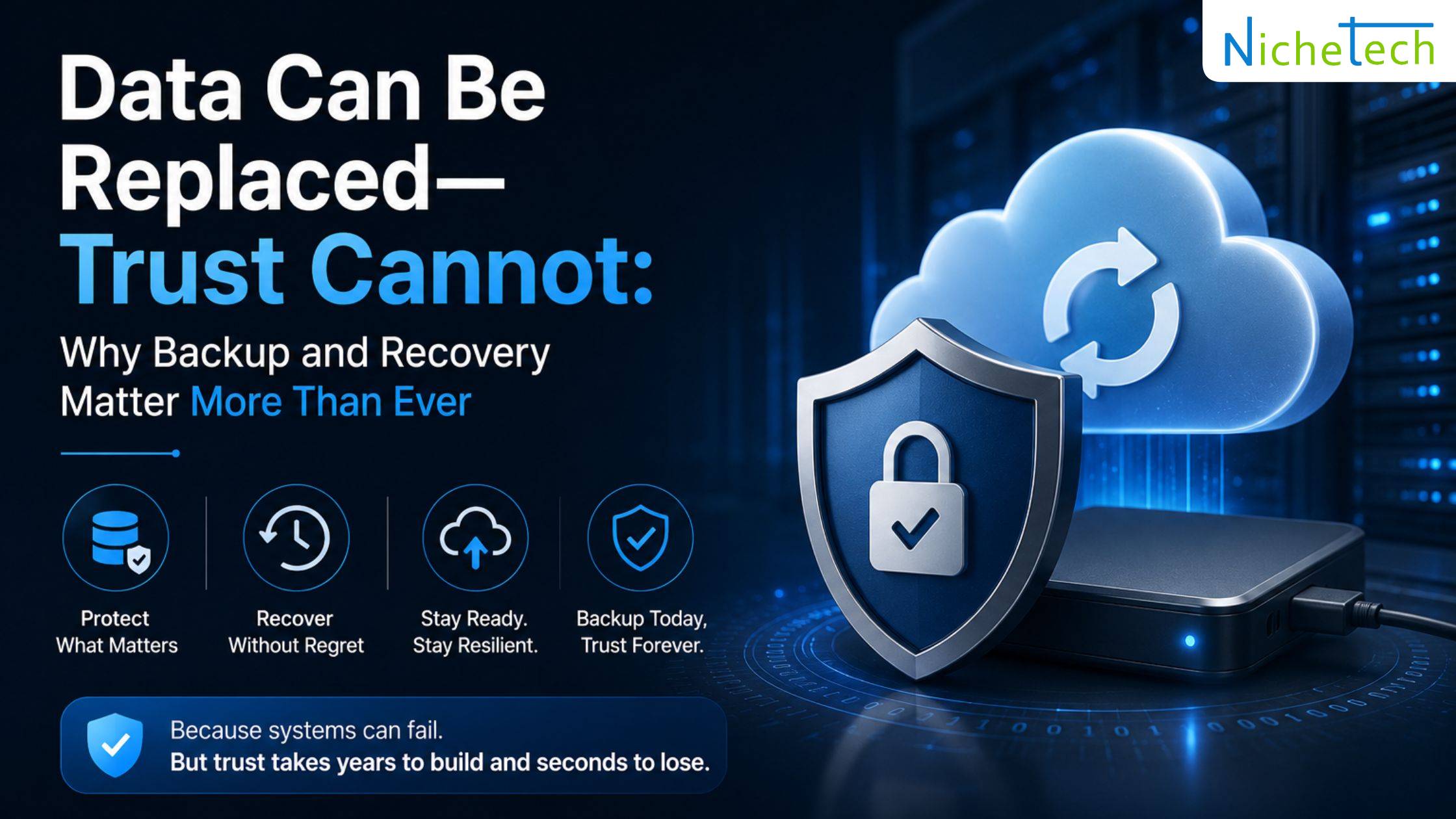
In today’s digital-first world, businesses rely heavily on data to operate, communicate and grow. From customer information and financial records to operational systems and business applications, data has become one of the most valuable assets for any organization.
However, while data can sometimes be recovered or recreated, the trust lost after a data breach, system failure or cyberattack is far more difficult to rebuild. Customers expect businesses to protect their information, maintain reliable systems and recover quickly from disruptions. This is why backup and recovery solutions strategies have become more important than ever.
Modern businesses are no longer asking if a disruption will happen; they are preparing for when it happens.
The Growing Importance of Data Protection
Every business today faces digital risks. Cyberattacks, ransomware, accidental deletions, hardware failures, software issues and even natural disasters can lead to unexpected data loss.
Even a short period of downtime can disrupt operations, affect customer experiences and create financial losses. For businesses that depend on digital systems, data protection is no longer optional; it is essential for continuity and long-term stability.
As organizations continue to store and manage larger volumes of data, the need for secure backup and recovery systems continues to grow. Businesses are now investing in smarter technologies that ensure data remains protected, accessible and recoverable under all circumstances.
Companies across industries are also adopting modern disaster recovery strategies to reduce operational risks and maintain uninterrupted services. In highly competitive markets, even a small disruption can affect customer confidence and long-term business growth.
Understanding Backup and Recovery
Backup refers to creating copies of important data and storing them securely so they can be restored if the original data is lost or damaged.
Recovery is the process of restoring that data and getting systems operational again after an incident.
Together, backup and recovery form a critical part of business continuity planning. They help organizations minimize downtime, reduce losses and maintain operational stability during unexpected situations.
Modern backup and recovery solutions are designed to automate data protection, making it easier for businesses to secure critical information without relying heavily on manual processes. Automated systems ensure that backups are completed regularly, reducing the chances of losing important business data.
Many organizations also integrate cloud backup and disaster recovery services into their infrastructure to improve flexibility and scalability. These solutions allow businesses to recover systems faster while supporting remote operations and distributed work environments.
Why Trust Matters More Than Data
Data loss can often be repaired, but damaged trust is much harder to recover.
Customers trust businesses with sensitive information such as personal details, payment data and confidential communications. If a company fails to protect that information or experiences prolonged downtime, customers may begin to question its reliability and security practices.
In competitive industries, trust plays a major role in customer loyalty and brand reputation. One major incident can impact relationships that took years to build.
This is why businesses must view backup and recovery not only as technical requirements but also as essential trust-building strategies. A reliable data protection system demonstrates responsibility, professionalism and commitment to customer security.
Businesses that prioritize cybersecurity and recovery planning often gain stronger customer confidence because clients know their information is being handled responsibly.
The Rising Threat of Cyberattacks
Cybersecurity threats are evolving rapidly. Ransomware attacks, phishing scams, malware and hacking attempts are targeting businesses of all sizes.
In many ransomware attacks, businesses lose access to critical files until a payment is made. Without proper backup systems, recovery becomes extremely difficult and expensive.
Reliable backup and recovery strategies provide a safety net, allowing businesses to restore data without depending entirely on attackers or damaged systems.
Cybercriminals are becoming more advanced, making it essential for businesses to strengthen both cybersecurity and data recovery capabilities. Organizations that fail to prepare often face longer downtime, higher financial losses, and severe reputational damage.
Advanced backup solutions combined with disaster recovery planning help businesses respond quickly to security incidents while minimizing operational disruption.
Minimizing Downtime and Business Disruption
Downtime can be costly.
When systems go offline, employees lose productivity, customer service slows down, and operations become disrupted. In some industries, even a few hours of downtime can result in major financial losses.
Backup and disaster recovery solutions help businesses restore operations faster, minimizing disruption and protecting revenue.The faster a business recovers, the less impact the incident has on customers and operations.
Modern recovery technologies now allow organizations to restore applications, files, and entire systems within minutes instead of days. This significantly reduces business interruption and helps maintain service continuity.
Businesses that rely on digital platforms, cloud services, and online transactions especially benefit from fast recovery systems because customer expectations for availability continue to rise.
Supporting Business Continuity
Unexpected events can happen at any time hardware failures, natural disasters, human errors or cyber incidents.
A strong backup and recovery strategy ensures that businesses can continue operating even during emergencies. It provides stability, reduces uncertainty and helps organizations recover with minimal damage.
Business continuity is no longer optional in modern digital environments it’s essential.
Companies are increasingly implementing business continuity planning alongside backup and disaster recovery systems to ensure long-term operational resilience. These strategies help businesses prepare for disruptions before they occur instead of reacting after damage has already happened.
A proactive approach not only reduces risks but also improves organizational confidence and preparedness.
Cloud Backup and Modern Recovery Solutions
Traditional backup methods are no longer enough for growing businesses.
Cloud backup solutions provide secure, scalable, and automated protection for modern operations. They allow businesses to store data securely offsite while ensuring quick access and recovery when needed.
Cloud-based recovery systems also support remote work environments, making data accessible and protected across multiple locations.Many organizations are now adopting hybrid cloud backup strategies that combine on-premise infrastructure with cloud storage for better flexibility and security.
Modern backup platforms also include automation, encryption and real-time synchronization features that improve overall efficiency and reliability. Businesses can protect large amounts of data while reducing manual effort and infrastructure costs.
Cloud disaster recovery services are becoming especially valuable because they allow businesses to recover systems quickly without requiring extensive physical hardware investments.
Compliance and Data Responsibility
Many industries now require businesses to follow strict data protection and compliance standards. Backup and recovery systems help organizations meet these requirements by ensuring secure storage, proper data handling, and recovery readiness.
Failure to protect data can result not only in financial loss but also in legal consequences and regulatory penalties.
Businesses handling sensitive customer information must prioritize compliance with security standards and data protection regulations. Secure backup systems help maintain proper documentation, audit trails, and recovery capabilities required by many regulatory frameworks.
Organizations that demonstrate strong data responsibility are often viewed as more trustworthy and reliable by both customers and partners.
Investing in Long-Term Security
Some businesses view backup systems as an unnecessary expense until a major incident occurs.
In reality, investing in backup and recovery is investing in business stability, customer trust, and long-term resilience. The cost of prevention is often far lower than the cost of recovering from major data loss.
Modern businesses are increasingly recognizing that backup and disaster recovery are strategic investments rather than optional technical tools. Reliable protection systems reduce operational risks, improve resilience and support long-term business continuity.
As digital dependency continues to grow, businesses that invest in stronger recovery infrastructure are better positioned to adapt, recover and maintain customer confidence during unexpected disruptions.
The Future of Backup and Recovery
Technology continues to evolve and backup systems are becoming smarter, faster and more automated.
Artificial intelligence, predictive analytics and automation are improving how businesses detect threats, manage backups, and recover systems. Intelligent recovery systems can now identify vulnerabilities early and reduce recovery times significantly.
As remote work, cloud computing and digital operations expand, businesses will continue to rely heavily on advanced recovery technologies to protect operations and customer trust.
The future of business resilience depends not only on preventing disruptions but also on recovering quickly when disruptions occur.
Final Thoughts
Data can often be restored. Trust cannot.
In an increasingly digital and connected world, businesses must prioritize backup and recovery systems not just as a technical requirement, but as a core part of protecting customer relationships and business reputation.
From cyber threats and operational failures to accidental data loss, risks are everywhere. The businesses that prepare today are the ones that remain resilient tomorrow.
By investing in secure backup systems, disaster recovery planning and long-term data protection strategies, organizations can reduce downtime, improve operational continuity, and maintain customer confidence.
Because when customers trust you with their data, protecting it becomes more than an IT responsibility it becomes a business responsibility.
FAQs
1. What is data backup?
Data backup is the process of creating secure copies of important files and business information so they can be restored if data is lost, damaged or deleted.
2. Why are backup and recovery important for businesses?
They help businesses recover quickly from cyberattacks, system failures or accidental data loss while reducing downtime and operational disruption.
3. What is disaster recovery?
Disaster recovery is a strategy that helps restore systems, applications and business operations after unexpected incidents or technical failures.
4. Are cloud backup solutions secure?
Yes, modern cloud backup solutions use encryption, automated backups and advanced security features to protect business data.
5. How often should businesses back up their data?
Most businesses should perform regular automated backups daily or more frequently depending on how important and active their data is.