The manufacturing industry is undergoing a major transformation. Rising customer expectations, global competition, supply chain disruptions, labor shortages and increasing operational costs are pushing manufacturers to rethink how they operate. Businesses that continue relying on manual processes and disconnected systems often struggle to maintain efficiency, profitability and long-term growth.
Digital transformation is no longer about adopting the latest technology, it is about creating smarter, more connected operations that improve productivity and support future expansion.
A successful digital transformation requires careful planning, the right technology, and a clear understanding of business goals. By partnering with an experienced Software Development Company, manufacturers can implement scalable digital solutions that streamline operations, improve decision-making and build a strong foundation for long-term success.
What Is Digital Transformation in Manufacturing?
Digital transformation is the process of integrating modern technologies into manufacturing operations to improve efficiency, automate workflows and enhance visibility across the business.
Rather than relying on paper-based records, spreadsheets, or isolated software systems, manufacturers use digital solutions to connect production, inventory, maintenance, quality control, field operations and management into a unified ecosystem.
The objective is not simply to replace manual work but to create faster, smarter and more data-driven operations.
Why Manufacturers Need a Digital Transformation Strategy
Many manufacturers invest in new technology without having a long-term roadmap. As a result, they end up with disconnected systems that fail to solve operational challenges.
A structured roadmap helps businesses identify priorities, implement solutions in the right sequence and ensure every technology investment supports overall business objectives.
Instead of reacting to problems as they arise, manufacturers can build a scalable digital infrastructure that supports sustainable growth.
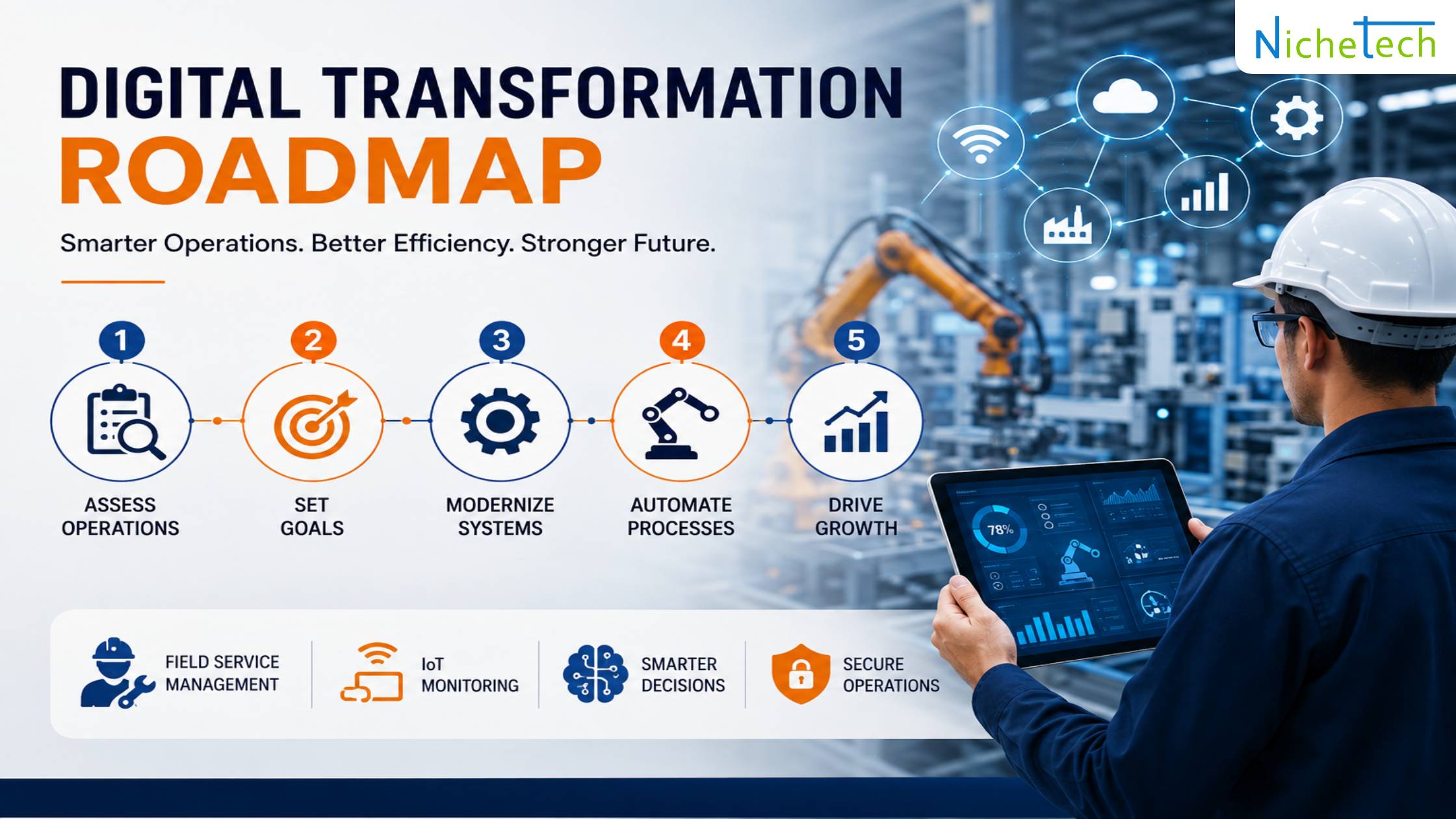
Step 1: Evaluate Current Operations
Every successful transformation begins with understanding existing processes.
Manufacturers should evaluate how production, inventory management, maintenance, procurement, quality inspections and field operations are currently managed.
Identifying bottlenecks, repetitive manual tasks, communication gaps and reporting challenges helps determine where technology can create the greatest impact.
This assessment forms the foundation for the entire digital transformation journey.
Step 2: Define Clear Business Objectives
Technology should always solve business problems.
Before selecting software or implementing automation, manufacturers should establish measurable goals such as:
- Improving production efficiency
- Reducing equipment downtime
- Increasing workforce productivity
- Enhancing quality control
- Optimizing inventory management
- Improving customer service
- Reducing operational costs
Clear objectives ensure technology investments deliver measurable business value.
Step 3: Build a Connected Digital Ecosystem
One of the biggest obstacles to operational efficiency is disconnected software.
Production teams, maintenance departments, warehouse staff, sales teams and management often work with different systems that do not communicate effectively.
An integrated digital ecosystem connects these departments, allowing information to flow seamlessly across the organization.
This improves collaboration while reducing duplicate work and manual data entry.
Step 4: Digitize Field Operations
Many manufacturing companies operate large field service teams responsible for equipment installation, maintenance, inspections and customer support.
Managing these activities manually often results in delayed communication, scheduling conflicts and limited operational visibility.
A Field Service Management helps manufacturers digitize field operations by enabling real-time technician tracking, digital work orders, maintenance scheduling, mobile reporting and centralized service management.
This improves technician productivity while reducing response times and administrative effort.
Step 5: Use IoT for Real-Time Equipment Monitoring
The Internet of Things (IoT) is transforming modern manufacturing by connecting machines, sensors, and production equipment.
Real-time monitoring provides valuable insights into equipment performance, energy consumption, operating conditions and maintenance requirements.
Instead of waiting for machines to fail, businesses can identify potential issues early and schedule preventive maintenance before costly breakdowns occur.
This approach improves equipment reliability while reducing production interruptions.
Step 6: Leverage Artificial Intelligence for Smarter Decisions
Artificial Intelligence (AI) enables manufacturers to analyze large volumes of operational data quickly and accurately.
AI-powered systems can forecast equipment failures, optimize production schedules, improve quality inspections, predict inventory demand and identify operational inefficiencies.
Rather than relying solely on historical reports, decision-makers gain predictive insights that support proactive planning and continuous improvement.
Step 7: Move to Cloud-Based Infrastructure
Cloud technology provides manufacturers with greater flexibility, scalability and accessibility.
Cloud-based systems allow employees, managers and field teams to access critical business information securely from any location.
As operations expand, cloud infrastructure enables businesses to increase computing resources without major investments in physical hardware.
This flexibility supports long-term digital growth while improving business continuity.
Step 8: Strengthen Cybersecurity
As manufacturing operations become increasingly digital, cybersecurity becomes more important than ever.
Production systems, customer information, financial records and intellectual property must be protected against cyber threats.
Manufacturers should implement secure authentication, encrypted data transmission, regular software updates, access controls and continuous monitoring to safeguard business operations.
Strong cybersecurity protects both operational continuity and customer trust.
Step 9: Train Employees for Digital Adoption
Technology delivers value only when employees know how to use it effectively. Providing proper training ensures staff understand new systems, workflows and digital tools.
Encouraging employee involvement during implementation also helps reduce resistance to change while improving adoption rates.
A digitally skilled workforce becomes an important asset in achieving long-term transformation goals.
Step 10: Continuously Measure and Improve
Digital transformation is an ongoing journey rather than a one-time project.
Manufacturers should regularly monitor key performance indicators such as production efficiency, equipment uptime, maintenance costs, inventory accuracy, technician productivity and customer satisfaction.
Continuous performance analysis helps businesses identify new opportunities for improvement and adapt to changing market demands.
Choosing the Right Technology Partner
Digital transformation requires expertise across software development, cloud infrastructure, AI, IoT, cybersecurity and enterprise system integration.
Working with an experienced Software Development Company helps manufacturers design solutions that align with their business goals instead of relying on generic software that may not meet operational requirements.
A reliable technology partner supports planning, development, implementation, integration and long-term maintenance, ensuring businesses maximize the value of their digital investments.
Final Thoughts
Digital transformation is reshaping the future of manufacturing. Companies that modernize their operations gain greater visibility, improve productivity, reduce costs and respond more effectively to changing customer and market demands.
By following a structured roadmap and investing in scalable technologies such as AI, IoT, cloud computing, and a Field Service, manufacturers can create connected operations that support long-term growth and operational excellence.
Partnering with the right Software Development Company ensures this transformation is strategic, efficient, and built for the future.
FAQs
1. What is digital transformation in manufacturing?
Digital transformation involves using modern technologies to improve manufacturing processes, automate workflows, increase operational visibility and enhance productivity.
2. Why is digital transformation important for manufacturers?
It helps improve efficiency, reduce downtime, optimize resource utilization, lower operational costs, and support long-term business growth.
3. How does a Field Service Management Application help manufacturing companies?
It streamlines field operations by managing work orders, scheduling maintenance, tracking technicians, and providing real-time updates for faster service delivery.
4. What technologies are commonly used in digital transformation?
Common technologies include Artificial Intelligence (AI), the Internet of Things (IoT), cloud computing, automation, analytics, and mobile applications.
5. Why should manufacturers work with a Software Development Company?
An experienced Software Development Company develops customized digital solutions, integrates business systems, ensures scalability, and helps manufacturers successfully implement their digital transformation strategy.