Technology plays a critical role in how modern businesses operate, compete and grow. Whether you are looking to improve internal operations, enhance customer experiences, automate workflows or launch a new digital product, choosing the right software solution is one of the most important decisions your business will make.
One question almost every growing business eventually faces is: Should we build custom software or buy an existing solution?
There is no one-size-fits-all answer. The right decision depends on your business goals, operational requirements, budget, scalability needs and long-term growth plans.
For some organizations, off-the-shelf software provides everything they need. For others, investing in Custom Software Development Services creates a stronger competitive advantage by delivering a solution built specifically for their business.
Understanding the advantages and limitations of both approaches can help you make a technology decision that supports your business today and well into the future.
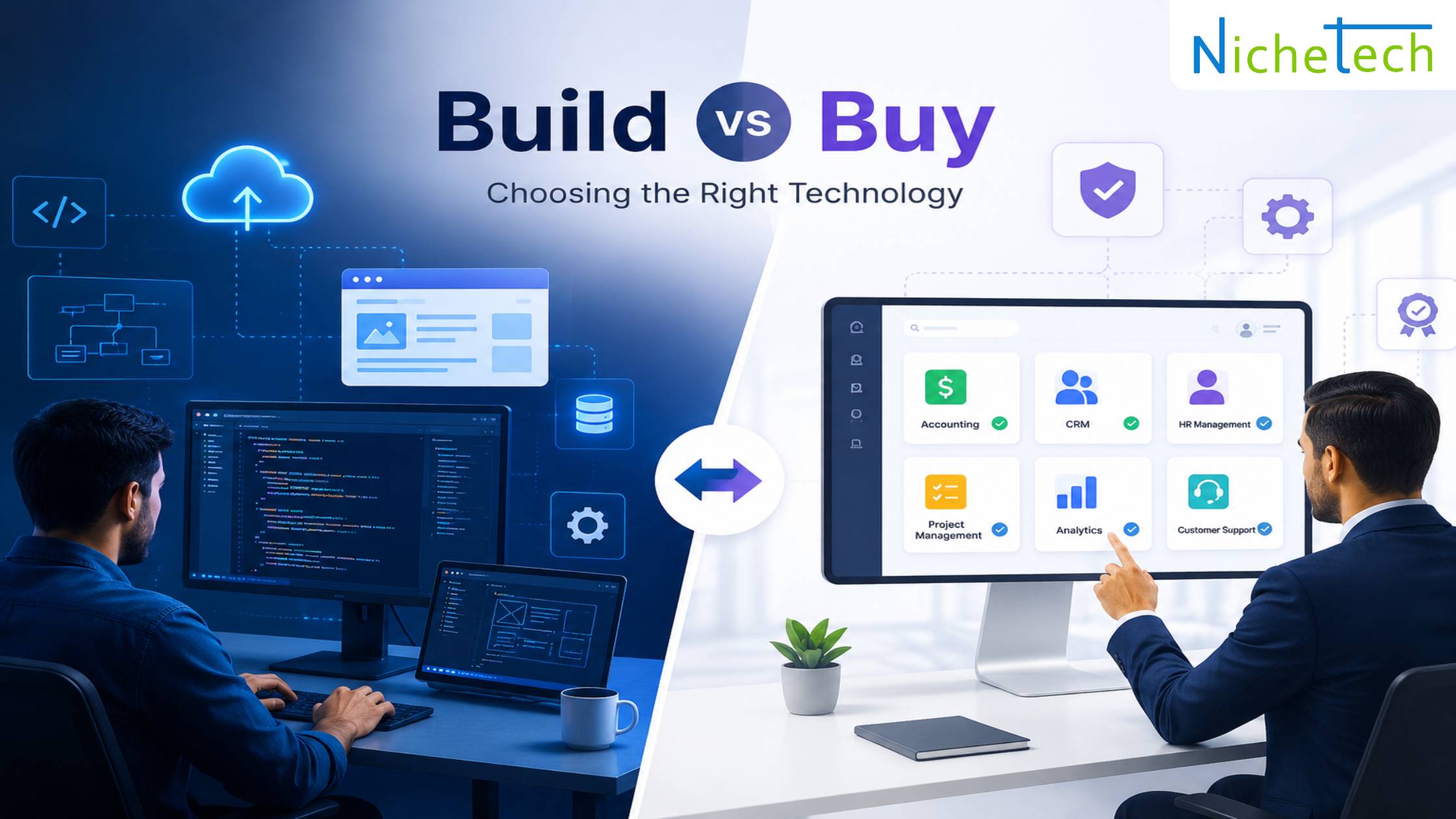
Understanding the Difference Between Build and Buy
Buying software means selecting a ready-made solution that has already been developed for a broad market. These platforms typically offer standard features that can be configured to suit many businesses.
Building software involves creating a custom solution designed specifically around your company’s workflows, processes and long-term objectives. Instead of adapting your business to fit existing software, the software is built to fit your business.
Both approaches offer unique benefits, but choosing the right one requires careful evaluation of your organization’s needs.
When Buying Software Makes Sense
Off-the-shelf software is often a practical choice for businesses with common operational requirements.
Applications for accounting, payroll, project management, customer communication or document collaboration are widely available and can often be implemented quickly with minimal setup.
These solutions usually have lower upfront costs and provide regular updates from the software provider, making them attractive for businesses with straightforward requirements.
For organizations looking to solve a standard business problem without extensive customization, buying software can be an efficient option.
The Limitations of Off-the-Shelf Software
While ready-made software offers convenience, it also comes with limitations.
Because these solutions are designed for a broad audience, they may include features your business never uses while lacking capabilities that are essential to your operations.
As your company grows, you may encounter restrictions related to workflows, integrations, user permissions, reporting or scalability. Many businesses also find themselves paying recurring subscription fees for software that only partially meets their needs.
Over time, adapting business processes to fit generic software can reduce efficiency rather than improve it.
Why More Businesses Are Choosing Custom Software
As organizations become more digital, many are discovering that standardized software cannot always support their evolving operations.
Custom software is designed specifically around the way your business works. Every feature, workflow, dashboard and integration is developed to support your operational goals.
Instead of compromising on functionality, businesses gain technology that aligns with their existing processes and future growth strategy.
This flexibility makes Custom Software Development Services an increasingly valuable investment for companies looking to improve efficiency and differentiate themselves in competitive markets.
Scalability Matters for Long-Term Growth
One of the biggest advantages of custom software is scalability. Business requirements rarely remain the same. Companies expand into new markets, introduce additional services, hire more employees and adopt new technologies over time.
A custom-built solution can grow alongside the business without requiring a complete replacement. Additional features, integrations, user roles and automation capabilities can be introduced as business needs evolve. This long-term flexibility helps organizations avoid the limitations often associated with off-the-shelf software.
Integration Creates More Efficient Operations
Modern businesses depend on multiple digital systems working together. Customer relationship management platforms, accounting software, inventory systems, HR applications, payment gateways and analytics tools all generate valuable business data.
Custom software can be designed to integrate seamlessly with existing business systems, eliminating duplicate data entry and improving operational efficiency. Better integration also provides leadership teams with more accurate insights for decision-making.
Security and Data Control
Protecting business data has become a top priority for organizations of every size. While many commercial software platforms offer strong security, businesses operating in regulated industries or managing sensitive information often require additional levels of protection.
Custom software allows organizations to implement security measures that align with their compliance requirements, internal policies and operational standards. Businesses also maintain greater control over their data, infrastructure and future software development.
Cost Should Be Evaluated Beyond the Initial Investment
Many organizations compare build versus buy based only on upfront costs. Although purchasing software often requires a lower initial investment, subscription fees, licensing costs, additional user charges, customization expenses and integration limitations can increase total ownership costs over time.
Custom software typically requires a larger initial investment but can deliver greater long-term value by reducing recurring licensing fees, improving operational efficiency and supporting business growth without expensive workarounds.
Evaluating the total cost of ownership provides a more accurate basis for making technology decisions.
Choosing the Right Technology Partner
Building custom software is about more than writing code. The right development partner takes time to understand your business goals, operational challenges, customer expectations and future growth plans before designing a solution.
Experienced providers of Custom Software Development Services work collaboratively throughout planning, development, testing, deployment and ongoing support to ensure the final product delivers measurable business value.
Choosing the right technology partner often has as much impact on project success as choosing the technology itself.
Making the Right Decision for Your Business
Every organization has unique operational requirements. If your business processes are relatively standard and your software needs are simple, purchasing an existing solution may be the most practical choice.
However, if your business relies on specialized workflows, requires extensive integrations, expects rapid growth or wants to create a competitive advantage through technology, investing in custom software can provide greater flexibility and long-term value.
The best decision is the one that supports both your current operations and your future business strategy.
Final Thoughts
The decision to build or buy software should never be based solely on cost or convenience.
It should be based on how technology can best support your organization’s efficiency, scalability, customer experience and long-term growth.
While off-the-shelf software remains a valuable solution for many businesses, companies with unique operational requirements often achieve greater success through Custom Software Development Services that are designed specifically around their goals
By partnering with an experienced software development company, businesses can create scalable, secure and future-ready solutions that drive innovation, improve productivity and support sustainable growth in an increasingly digital world.
FAQs
1. What is the difference between building and buying software?
Buying software means using an existing solution with standard features, while building software involves creating a custom solution designed specifically for your business needs.
2. When should a business choose custom software development?
Businesses should consider custom software when they require unique workflows, advanced integrations, greater scalability, stronger security or specialized functionality that standard software cannot provide.
3. Is custom software more expensive than off-the-shelf software?
Custom software usually has a higher initial investment, but it can provide better long-term value by reducing recurring licensing costs, improving efficiency and supporting future growth.
4. Can custom software integrate with existing business systems?
Yes. One of the biggest advantages of custom software is its ability to integrate seamlessly with existing platforms such as CRM systems, ERP software, accounting tools, payment gateways and other business applications.
5. Why is choosing the right software development company important?
An experienced software development company understands your business objectives, recommends the right technology, develops scalable solutions and provides ongoing support to ensure long-term success.