
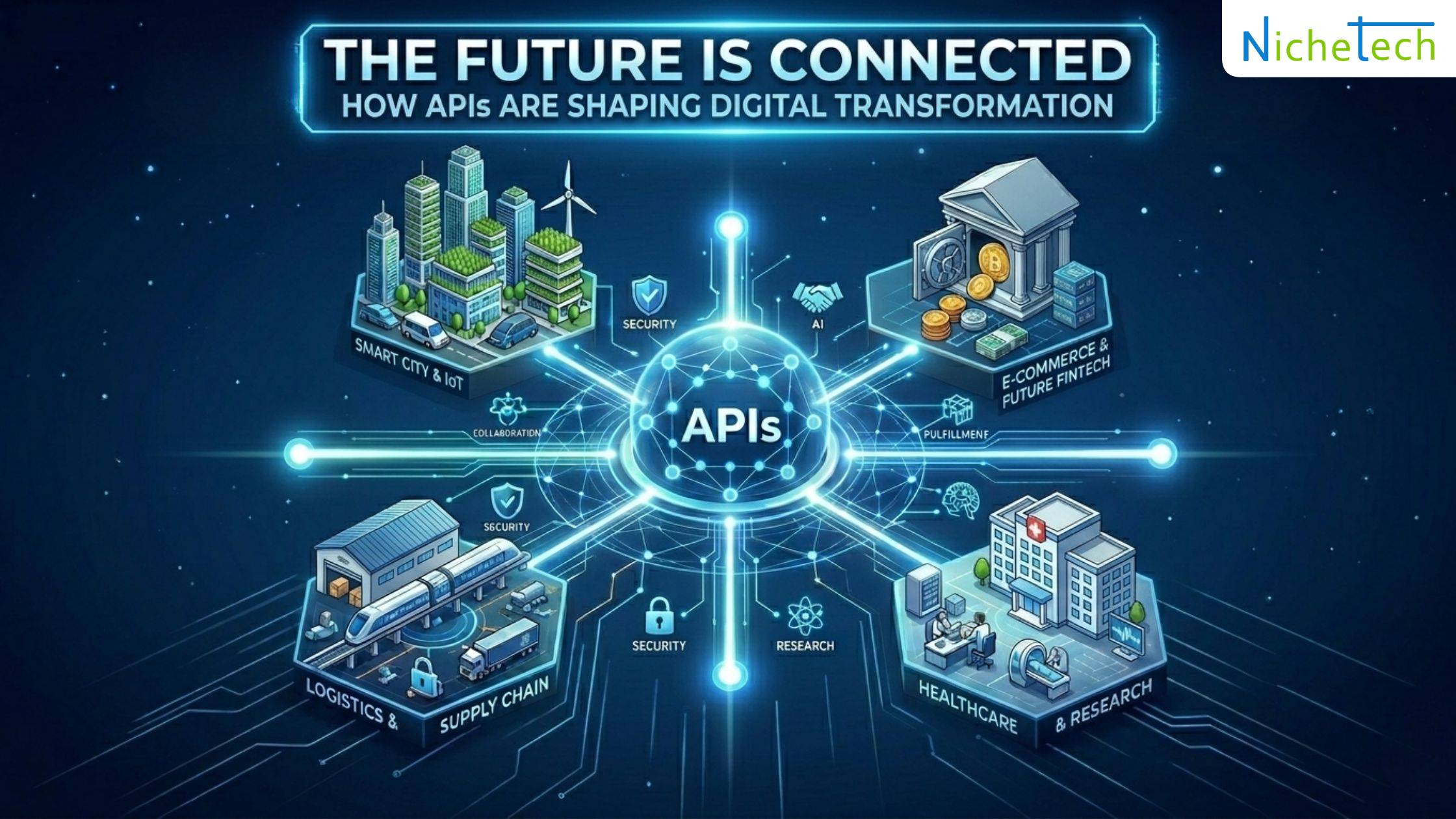
In today’s rapidly evolving digital landscape, businesses are no longer operating in isolation. Organizations rely on a wide range of technologies from mobile applications and cloud platforms to customer relationship systems and payment gateways to manage operations and deliver value.
However, the real power of these technologies lies not in their individual capabilities, but in how effectively they work together. The key to this seamless connectivity is APIs (Application Programming Interfaces).
APIs are the backbone of modern digital ecosystems. They enable systems to communicate, share data and function as a unified network. As businesses continue to embrace digital transformation, APIs are playing a central role in driving innovation, efficiency and long-term growth.
What Are APIs?
An API, or Application Programming Interface, is a set of rules and protocols that allows different software applications to communicate with each other.
Instead of building every feature from scratch, developers can use APIs to connect systems and access functionalities from other platforms. This makes development faster, more efficient and more scalable.
For example, when you use a mobile app to make a payment, track a delivery or log in using social media, APIs are working behind the scenes. They ensure that data is transferred securely and instantly between systems.
APIs simplify complex processes and make it possible for different technologies to work together seamlessly.
APIs as the Foundation of Digital Transformation
Digital transformation is not just about adopting new technologies, it is about using those technologies to improve business processes, enhance customer experiences and create new opportunities.
APIs make this transformation possible by connecting different systems into a unified ecosystem. Without APIs, businesses would struggle to integrate tools, automate workflows, or scale operations efficiently.
Think of APIs as bridges that connect separate systems, allowing data to flow smoothly between them. This connectivity enables businesses to operate more efficiently and respond quickly to changing market demands.
Key Benefits of APIs in Modern Businesses
1. Seamless Integration
One of the most important advantages of APIs is their ability to integrate different systems. Businesses often use multiple tools such as CRM, ERP, marketing platforms, and analytics software.
APIs connect these systems, eliminating data silos and creating a centralized flow of information. This ensures that all departments have access to accurate and up-to-date data.
2. Faster Innovation
APIs allow developers to build new features quickly by leveraging existing functionalities. Instead of starting from scratch, they can integrate third-party services and focus on enhancing core business offerings.
This significantly reduces development time and accelerates innovation, enabling businesses to bring new products and services to market faster.
3. Improved Customer Experience
In today’s competitive market, customer experience is a key differentiator. APIs enable real-time data exchange, allowing businesses to deliver faster, more personalized and more responsive services.
For example, APIs can provide instant updates on order status, enable seamless payments and support personalized recommendations based on user behavior.
4. Scalability and Flexibility
As businesses grow, their technology needs evolve. APIs provide the flexibility to add new tools, services, and functionalities without disrupting existing systems.
This scalability ensures that businesses can adapt to growth and changing requirements without major overhauls.
5. Cost Efficiency
By reusing existing services and automating processes, APIs help reduce development and operational costs. Businesses can achieve more with fewer resources, improving overall efficiency.
Real-World Applications of APIs
APIs are used across industries to power a wide range of applications and services.
In e-commerce, APIs connect payment gateways, inventory systems, and shipping providers to create a seamless shopping experience. Customers can browse products, make payments, and track deliveries all powered by APIs.
In healthcare, APIs enable secure data sharing between systems, improving patient care and operational efficiency.
In the financial sector, APIs support digital banking, online payments and real-time transactions. They allow users to access financial services quickly and securely.
Even everyday features like logging in through social media or using maps for navigation depend on APIs working behind the scenes.
The Rise of API-First Strategy
As the importance of APIs continues to grow, many organizations are adopting an API-first approach. This means designing systems and applications with APIs at the core from the very beginning.
An API-first strategy ensures that systems are built for integration, scalability and flexibility. It also improves collaboration between development teams, as APIs provide a clear structure for communication between different components.
By prioritizing APIs, businesses can create more adaptable and future-ready systems.
Security and Governance in API Usage
While APIs offer numerous benefits, they also require strong security measures. Since APIs facilitate data exchange, protecting sensitive information is critical.
Businesses must implement authentication methods, encryption protocols, and access controls to ensure secure communication. Proper monitoring and governance are also essential to detect and prevent unauthorized access.
By prioritizing security, organizations can build trust and ensure the safe use of APIs across their systems.
APIs and Emerging Technologies
APIs are not just shaping current digital transformation they are also enabling future innovations. Technologies such as artificial intelligence, the Internet of Things (IoT) and cloud computing rely heavily on APIs.
For example, IoT devices use APIs to communicate with each other and share data in real time. AI-powered systems use APIs to access data and deliver intelligent insights.
As these technologies continue to evolve, APIs will play an even more critical role in enabling seamless connectivity and advanced functionality.
Enhancing Business Agility
In a fast-changing business environment, agility is essential. Companies need to respond quickly to market trends, customer demands and technological advancements.
APIs enhance business agility by allowing organizations to adapt their systems without major disruptions. New features can be added, existing processes can be improved and integrations can be updated with minimal effort.
This flexibility gives businesses a competitive advantage and helps them stay ahead in the digital landscape.
Building a Connected Ecosystem
The future of business lies in connected ecosystems where systems, applications, and devices work together seamlessly.
APIs are the foundation of this ecosystem. They enable communication between different components, ensuring that data flows smoothly and efficiently.
A connected ecosystem improves collaboration, enhances productivity and creates new opportunities for innovation.
Final Thoughts
The future of business is connected and API integrations are at the center of this transformation. They enable systems to communicate, streamline operations and unlock new opportunities for growth.
For businesses looking to succeed in a digital-first world, connecting systems is no longer optional, it’s essential. By leveraging APIs effectively, organizations can improve efficiency, enhance customer experiences and build a strong foundation for the future.
In a world driven by technology, connectivity is power and APIs are what make it possible.
FAQs
1. What is an API?
An API is a tool that allows different software systems to communicate and share data.
2. Why are APIs important for digital transformation?
They connect systems, automate processes and enable seamless data flow.
3. Are APIs secure?
Yes, when proper security measures like authentication and encryption are implemented.
4. What is an API-first approach?
It is a strategy where systems are designed with APIs as the foundation.
5. Can small businesses benefit from APIs?
Yes, APIs help improve efficiency, reduce costs and support business growth.