In today’s digital economy, technology plays a central role in determining how successfully a business grows. Every modern business whether it is a startup or an established enterprise, relies on software to manage operations, customers, data and daily workflows.
This is why choosing the right software development company becomes extremely important. The systems they build must not only solve current challenges but also support long-term business growth. When software is not designed with scalability in mind, businesses often face performance issues, downtime and operational limitations as they expand.
A scalable software system ensures that technology grows along with the business instead of becoming a barrier to it.
What Is a Scalable Software System?
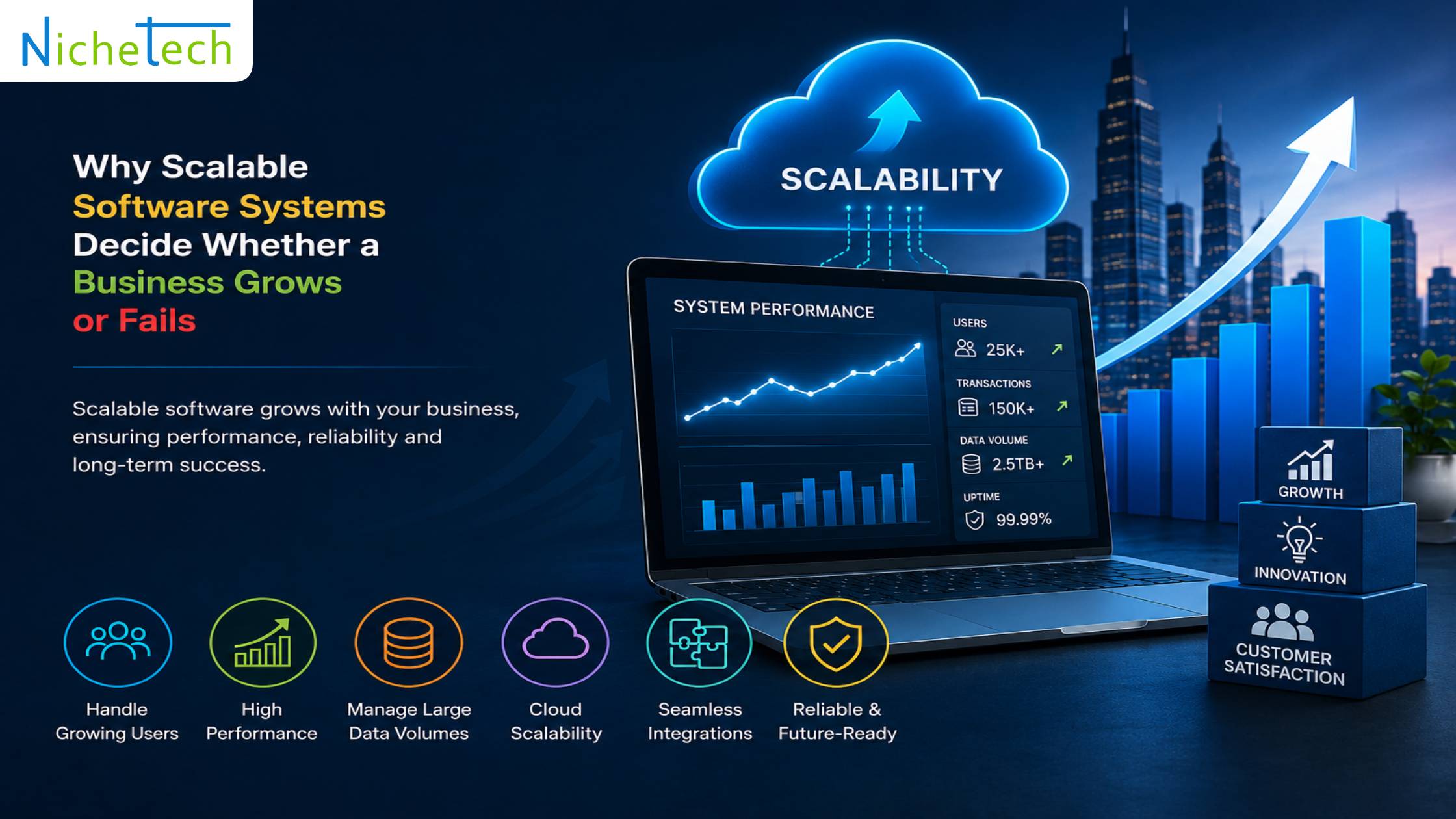
A scalable software system is designed to handle increasing business demands without compromising performance, speed or reliability. As usage grows, the system expands its capacity smoothly instead of requiring a complete rebuild or failing under pressure.
Scalability ensures that software can support more users, higher workloads and larger volumes of data while maintaining consistent performance. It allows a business to grow without worrying about technical limitations slowing it down.
A scalable system can easily handle growing user traffic as customer demand increases. It can process a higher number of transactions without delays or system crashes. It is also capable of managing expanding databases and large-scale data processing efficiently. As businesses introduce new features, tools or integrations, scalable systems adapt without disrupting existing operations.
Instead of breaking under pressure, scalable systems evolve smoothly with business growth.
Why Business Growth Creates System Pressure
In the early stages of a business, simple software solutions are often enough to manage daily operations. However, as the business grows, complexity increases rapidly. More customers, more transactions, more employees and more data all place additional pressure on existing systems.
Over time, systems that were originally designed for smaller operations begin to struggle. Performance slows down, processes become inefficient and technical issues appear more frequently.
This usually happens not because the system is poorly built, but because it was never designed for long-term scalability.
Risks of Non-Scalable Systems
Businesses that rely on non-scalable systems often face serious challenges as they grow. Systems may slow down during peak traffic, which affects productivity and customer experience. In some cases, they may even crash completely, leading to service disruptions and revenue loss.
Data processing delays can also slow down decision-making and reduce operational efficiency. As problems increase, maintenance costs rise because teams spend more time fixing issues instead of improving the system.
Over time, these limitations can negatively impact customer trust, especially in competitive markets where reliability is essential.
Customer Experience Depends on System Performance
In the digital world, customer expectations are higher than ever. Users expect fast, smooth and reliable experiences across websites, mobile apps and digital platforms. If a system is slow or frequently unavailable, customers quickly switch to competitors.
Scalable software systems ensure stable performance even during high traffic periods or peak usage times. Whether it is handling orders, processing requests or managing services, scalability ensures a seamless customer experience.
A strong and stable system directly improves customer satisfaction and builds long-term trust.
Scalability Enables Long-Term Business Growth
Scalability is not just about handling current demand, it is about preparing for future expansion. A scalable system allows businesses to grow without facing technical barriers.
Companies can expand operations, launch new services and enter new markets without rebuilding their entire software infrastructure. This reduces long-term costs and ensures smoother business scaling.
Instead of constantly fixing system limitations, businesses can focus on innovation, strategy and growth.
Flexibility and Integration Capabilities
Modern businesses depend on multiple digital tools such as CRMs, payment gateways, analytics platforms and third-party applications. A scalable system allows seamless integration with these tools without affecting existing workflows.
This flexibility helps businesses quickly adapt to changing market demands and customer expectations. It ensures that the entire software ecosystem remains connected, efficient and future-ready.
Role of Cloud Technology in Scalability
Cloud technology has transformed how businesses achieve scalability. Instead of relying on fixed infrastructure, cloud-based systems allow resources to be increased or decreased based on demand.
This improves performance, reduces operational costs and increases flexibility. Businesses can scale resources during high demand and reduce them during low usage, ensuring efficient resource management.
Cloud-based systems also improve accessibility, reliability and system maintenance, making them a preferred choice for modern scalable solutions.
Technology Should Support Growth Not Limit It
Many businesses make the mistake of choosing software based only on current needs. While this approach may work initially, it often leads to major limitations as the business grows.
Technology should always support business growth, not restrict it. A scalable system ensures that expansion happens smoothly without technical obstacles.
This is why choosing the right software development company is not just a technical decision it is a long-term investment in business success.
Final Thoughts
Scalable software systems play a critical role in determining whether a business grows successfully or struggles with operational limitations. As businesses expand, only systems built for scalability can maintain performance, reliability and efficiency.
Companies that invest in scalable technology are better prepared for future growth, customer demands and market changes. Those that ignore scalability often face technical breakdowns that slow down progress.
In today’s competitive digital landscape, scalability is not optional, it is essential for survival and long-term success.
FAQs
1. What is a scalable software system?
A scalable software system is designed to handle increasing users, data and workload without affecting performance or stability.
2. Why is scalability important for business growth?
It ensures smooth expansion without system failures, slow performance or operational delays.
3. What happens if a system is not scalable?
Non-scalable systems often become slow, unstable, expensive to maintain and difficult to manage as the business grows.
4. How does cloud technology support scalability?
Cloud systems allow flexible resource scaling based on demand, improving efficiency and performance.
5. Why choose a software development company for scalable systems?
Because experienced companies design future-ready systems that support long-term growth and stability.